An engine, built to turn stories into animation prompts.
Client
Personal project
Year
2026
Type
Desktop app
Role
Product Designer & Build
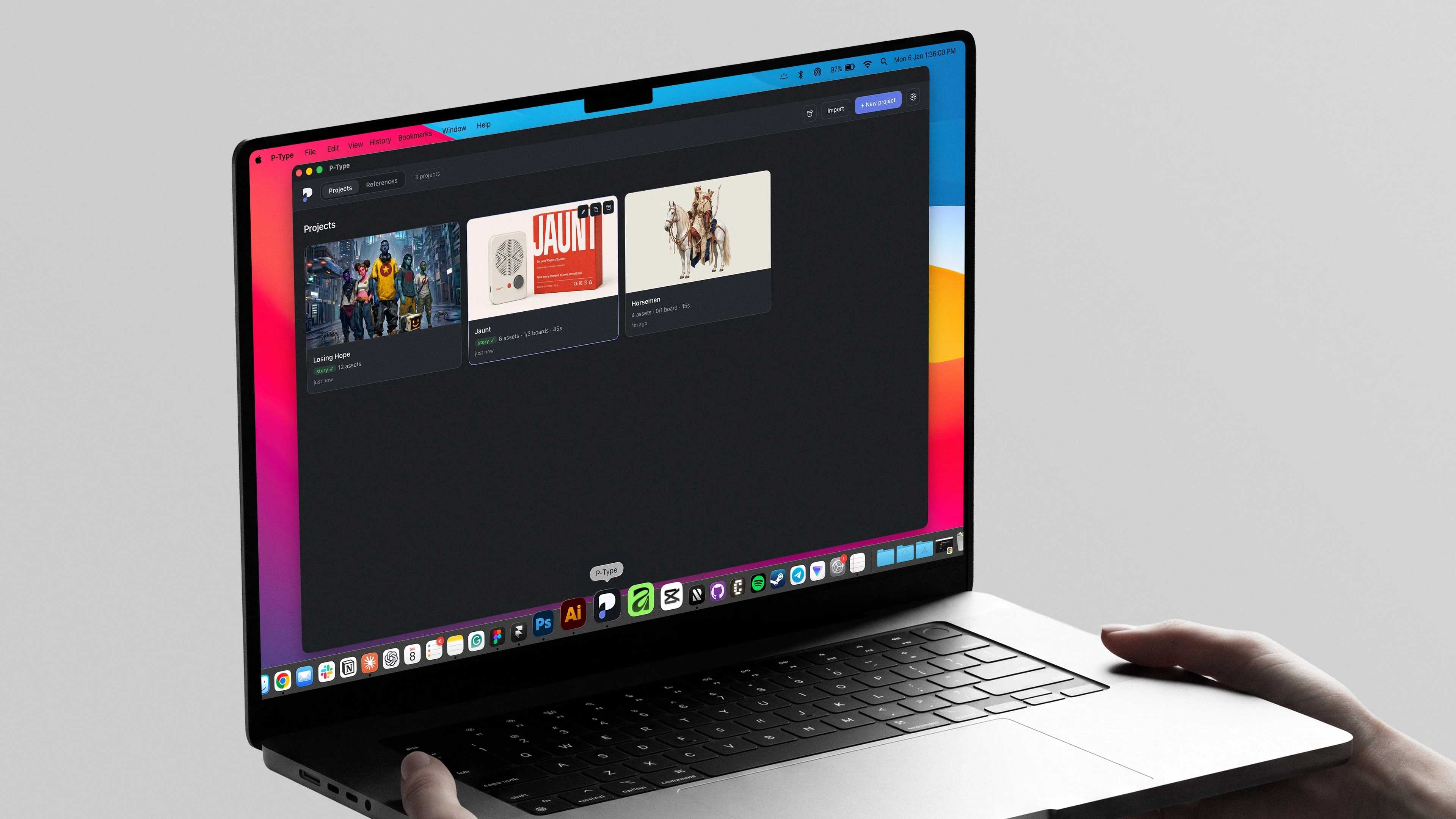
01 — Starting condition
Built to give story ideas a proper system.
Story and animation ideas move fast: a concept becomes reference images, then specific decisions about pacing, staging and camera. That process deserved a system of its own, one place to hold the story, the assets and the decisions together, with a clear path from that structure straight through to animation-ready output. So that's what got built, owned end to end rather than assembled from someone else's platform.

P-Type · a dedicated product, not a feature bolted onto another platform
02 — Approach
Decide the rules before touching the interface.
Two decisions did most of the work. First: no server, no cloud database. Every project lives in its own folder, so it can be backed up, moved, or opened on another machine without anything else needed. Second: nothing changes without being written down first. Before a new feature touches how a project is saved, the change is documented and tested, so nothing breaks work already in progress. Small discipline, and it's exactly what makes the tool one you can trust.
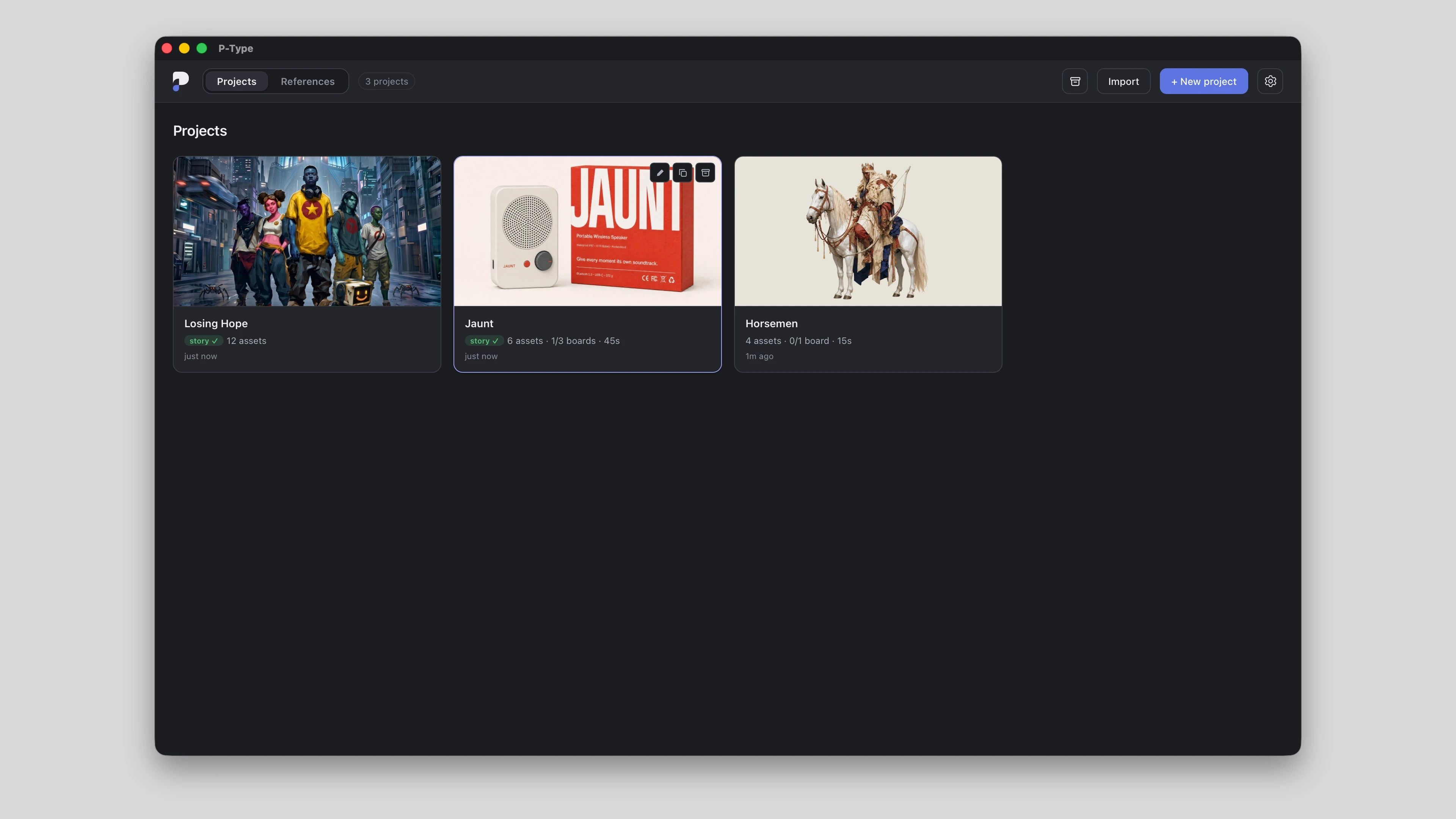
Projects screen · three self-contained project folders
03 — What was delivered
How the engine works.
Turns a written scene into a ready-to-use prompt for both a storyboard and the animation itself, checking automatically that everything lines up before it's sent off, saving real money along the way. Character consistency was the hardest part to hold: image and video models redraw a character a little differently every time, so each one carries a locked reference sheet, fixed views, palette, detail crops, that the compiler treats as non-negotiable across every shot it appears in.
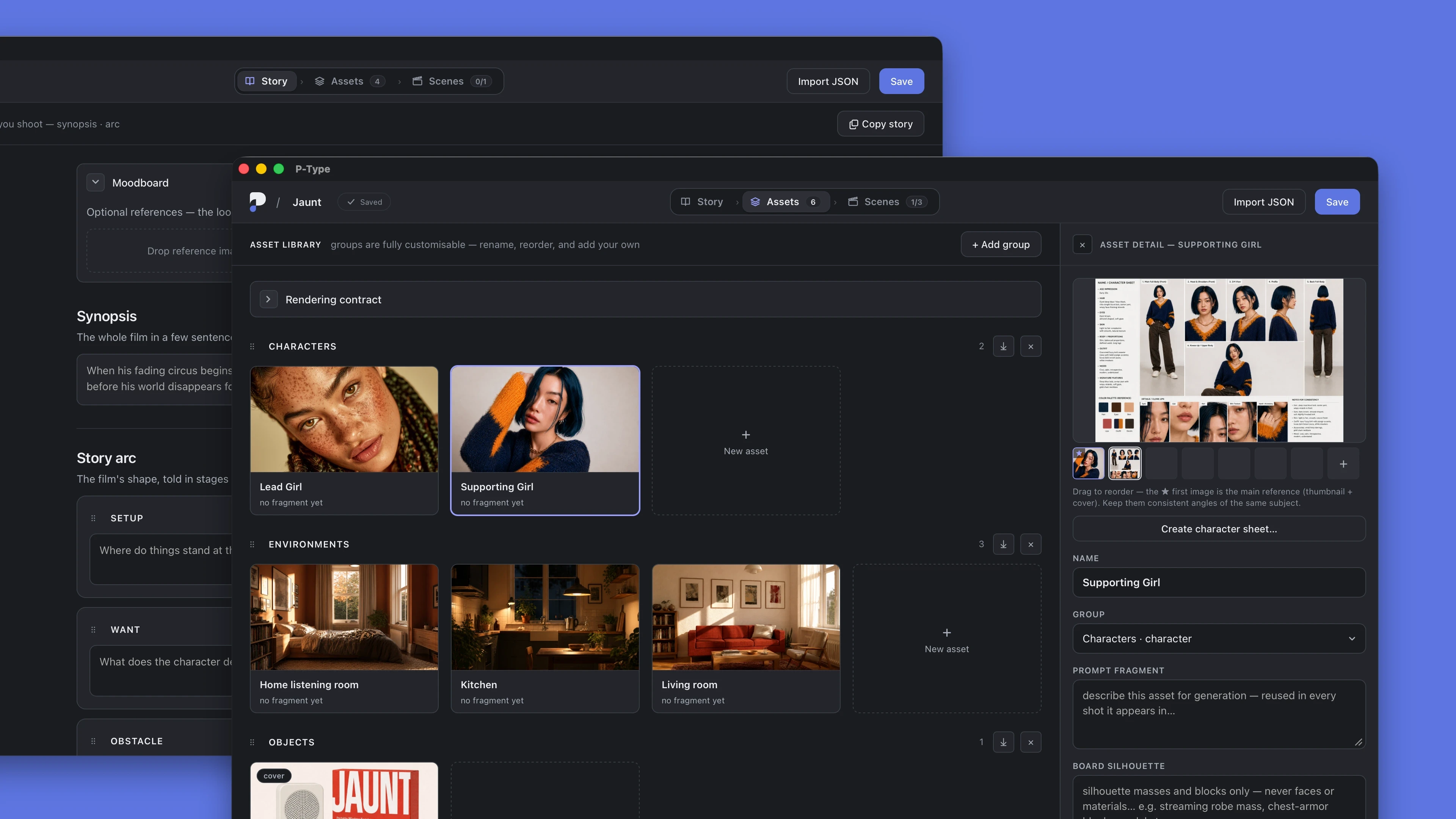
Story and asset library · synopsis, arc and character references held in one place
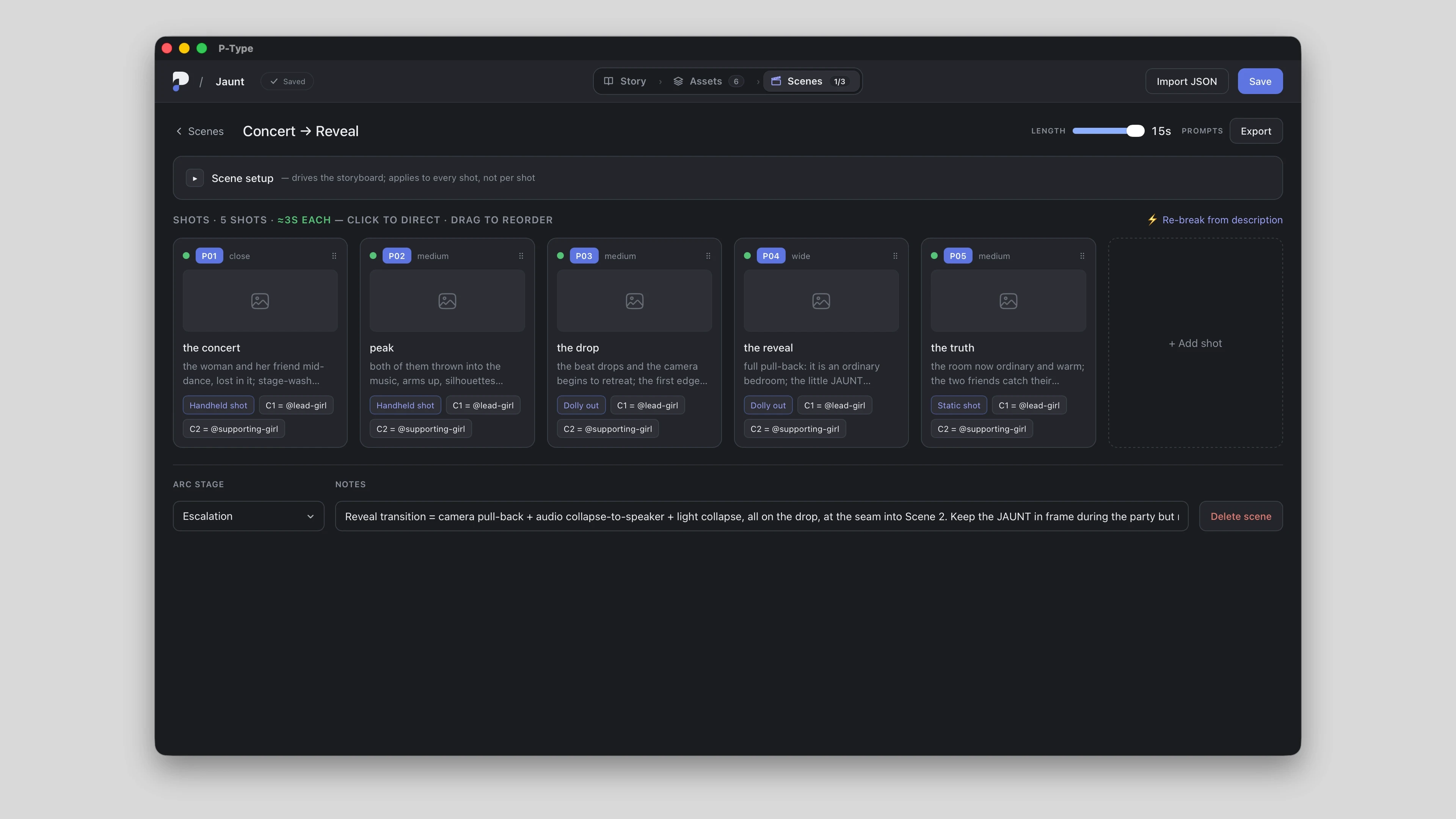
Scene editor · a 15-second phrase broken into five shots, each bound to cast and camera
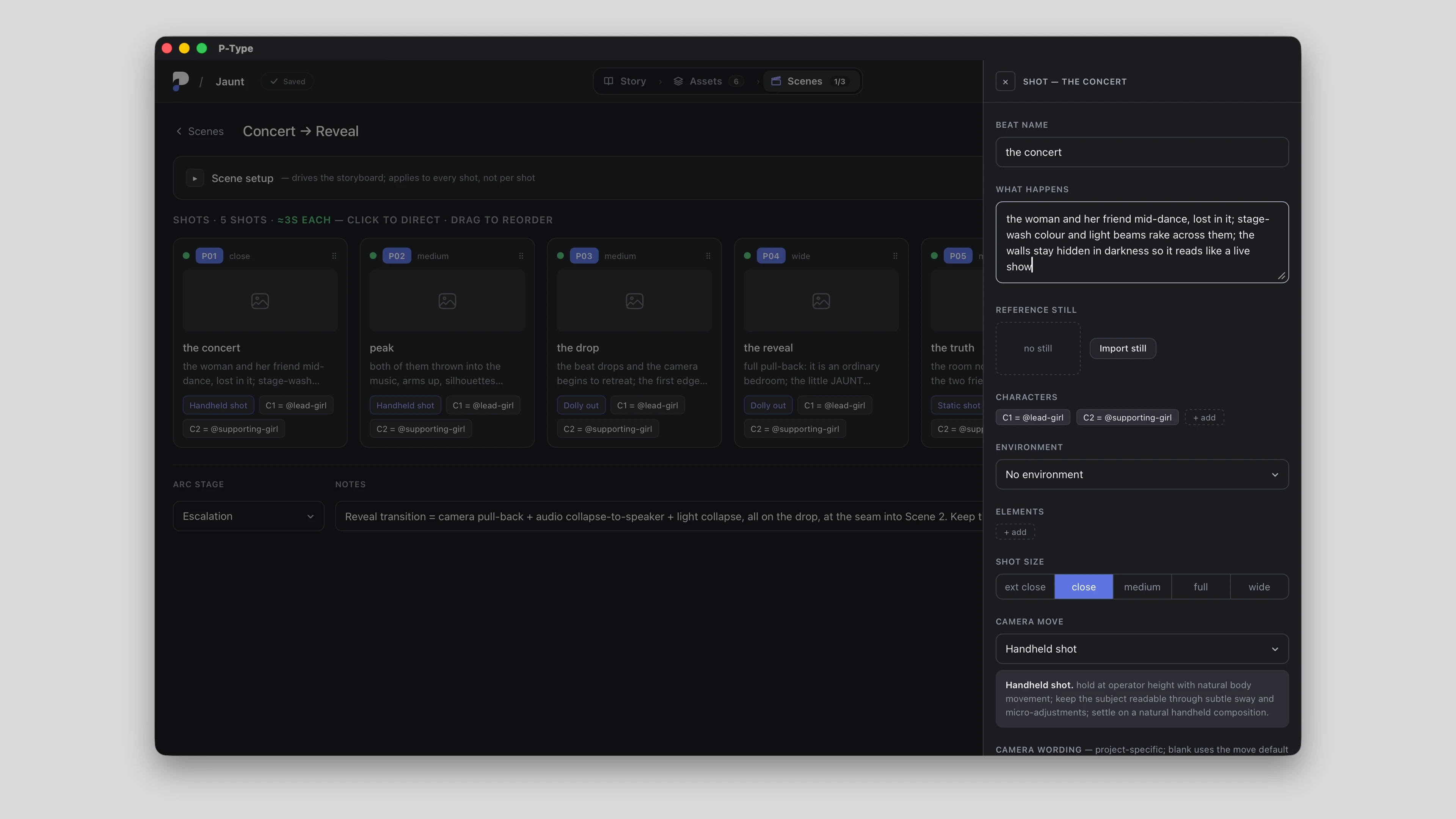
Shot detail · cast, environment, camera move and camera wording locked per shot
04 — In Use
What comes out the other end.
A short piece made while using P-Type. The tool held the concept, the assets and the shot order; the footage itself was generated in Higgsfield.
LOSING HOPE · MUSIC VIDEO. STRUCTURED IN P-TYPE, GENERATED IN HIGGSFIELD
05 — Outcome
Parked the interface. Kept the engine.
The most interesting result was realising where the real value actually lived: not in the screen, but in what powered it. Most of the real thinking happens in conversation. So the interface was set aside as a simple viewer, and the logic behind it, the part that actually does the thinking, now runs on its own and plugs in wherever it's needed. Still actively developed.
Next Project